

Discover the Benefits of Shade Plants: Why They Belong in Every Garden
Most homeowners imagine a successful landscape as a sun-filled garden overflowing with color. But across Martha’s Vineyard and Cape Cod, some of the most beautiful and resilient outdoor spaces are built around something entirely different: shade.
Mature trees, coastal architecture, neighboring structures, and narrow property layouts naturally create low-light areas throughout many New England landscapes. And while these shaded spaces are often viewed as limitations, they frequently become the areas where thoughtful landscape design matters most.
Without proper planning, shaded sections of a property can quickly become damp, patchy, visually disconnected, or difficult to maintain. Grass struggles. Soil compacts. Moisture lingers longer after rainstorms. Freeze-thaw cycles create additional stress during colder months. Over time, these overlooked areas can quietly diminish the overall appearance and functionality of an outdoor space.
That is precisely where carefully selected shade plants begin to transform a property.
When approached correctly, shade gardening introduces texture, softness, seasonal variation, and ecological balance into areas many homeowners initially assume are unusable. Especially across coastal New England, where sandy soil, salt exposure, seasonal storms, and fluctuating moisture conditions continuously influence long-term landscape performance.
At Millers Pro Landscape, successful planting design often begins not with sunlight, but with understanding how the property behaves throughout the entire year.
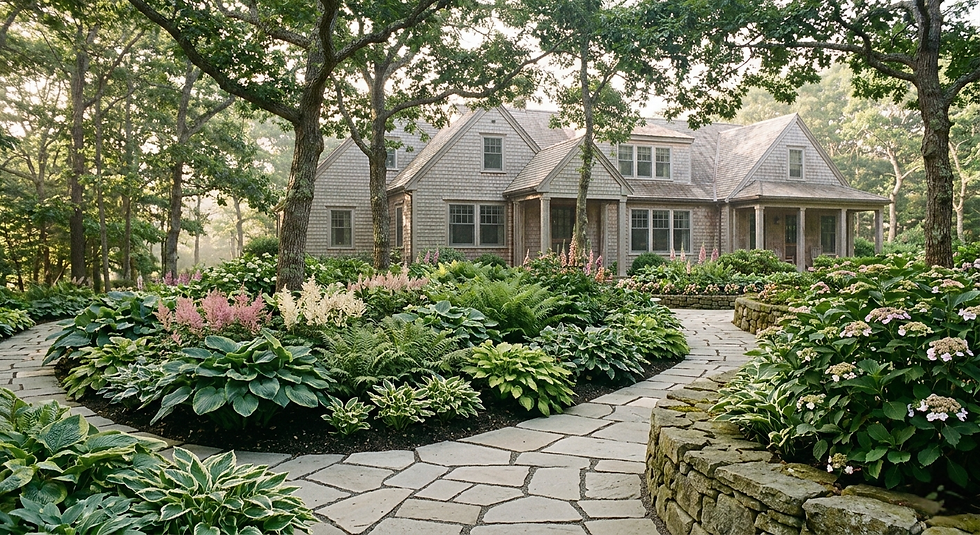
What Are Shade Plants?
Shade plants are species specifically adapted to grow in environments with limited direct sunlight. Some tolerate partial shade for only part of the day, while others thrive almost entirely beneath tree canopies or alongside shaded architectural structures.
These plants have evolved differently from traditional sun-loving varieties. Their foliage often retains moisture more efficiently, their root systems adapt to cooler soil conditions, and many develop broader leaves designed to maximize filtered light exposure.
In regions like Martha’s Vineyard and Cape Cod, shade conditions are influenced not only by trees but also by:
Dense coastal vegetation
Large hedgerows
Multi-level homes
Detached guest houses
Pergolas and outdoor structures
Seasonal light changes throughout the year
Because of this, shade gardening becomes less about simply “filling empty areas” and more about designing intentional transitions throughout the landscape.
Why Shade Matters More Than Homeowners Expect
Many shaded areas fail not because the plants are unhealthy, but because the wrong plant varieties were selected from the beginning.
A full-sun flowering plant placed in heavy shade may survive temporarily, but over time homeowners often notice:
Weak blooming cycles
Increased mildew issues
Sparse growth
Root instability
Excessive maintenance demands
Soil erosion beneath tree canopies
On coastal properties, these problems can worsen due to moisture retention and reduced airflow. Combined with New England freeze-thaw cycles, improperly planned shaded areas may become difficult to stabilize long term.
That is one reason experienced landscape designers evaluate shade patterns seasonally rather than only during summer months.
A backyard that feels bright in July may become heavily shaded by late September as sunlight angles shift across the property.
Additional planning strategies for climate-responsive landscapes can also be found throughout the Millers Pro Landscape project resources:https://www.millersprolandscape.com/flowersandplants
Types of Shade Plants
Not all shade conditions are identical, and not all shade loving plants respond to low light environments the same way.
Some thrive in partial shade with a few hours of filtered sunlight. Others perform best in deep shade where direct sun exposure remains minimal.
Understanding the difference is critical for long-term success.
Common Shade Categories
Partial Shade
Receives approximately 3 to 6 hours of indirect or filtered sunlight daily.
Full Shade
Typically receives less than 3 hours of direct sunlight.
Dappled Shade
Filtered sunlight passing through trees or overhead vegetation.
On Martha’s Vineyard and Cape Cod properties, dappled shade is particularly common beneath mature oak trees, hydrangea borders, and coastal woodland edges.
Shade-Loving Flowers That Perform Well in Coastal New England

Many homeowners assume shaded gardens lack color. In reality, some of the most elegant and visually layered landscapes rely heavily on carefully selected shade flowers and textured foliage combinations.
Especially in high-end properties where understated sophistication often feels more timeless than excessive seasonal color.
Popular Shade Loving Flowers Include:
Astilbe
Hellebores
Foxglove
Bleeding Heart
Japanese Anemones
Impatiens
Begonias
Hydrangeas in filtered light areas
These varieties introduce movement, softness, and seasonal transitions while adapting well to coastal conditions.
And because many shaded gardens retain moisture longer, thoughtful plant selection also helps stabilize surrounding soil while reducing stress on irrigation systems.
Annuals vs. Perennials in Shade Gardens
One of the most common questions homeowners ask involves whether annual or perennial plantings perform better in shaded environments.
The answer depends largely on maintenance expectations and long-term design goals.
Annual Shade Flowers
Annuals provide immediate seasonal color and flexibility.
Popular options include:
Impatiens
Coleus
Wax begonias
Torenia
These work particularly well in container gardens, entryways, and entertainment spaces where homeowners want vibrant seasonal variation.
Perennial Shade Gardens
Meanwhile, shade hardy perennials offer stronger long-term stability.
Many plants shade loving perennials establish deeper root systems over time, helping landscapes remain visually balanced even during fluctuating coastal weather conditions.
Popular perennial selections include:
Hostas
Ferns
Coral bells
Lungwort
Brunnera
Solomon’s seal
These varieties often require less long-term replacement while contributing to healthier ecosystem balance across the property.
Why Shade Hardy Perennials Matter in Coastal Landscapes
On Martha’s Vineyard and Cape Cod, climate conditions place additional stress on ornamental planting systems.
Salt exposure, shifting moisture levels, sandy soil conditions, and winter ground movement all influence plant durability over time.
That is why experienced designers often prioritize perennials like shade environments naturally adapted to regional growing conditions.
The goal is not simply visual appearance during peak summer months.
The goal is resilience.
Especially in second home properties where homeowners may not monitor landscape performance daily throughout the year.
Landscape planning resources related to seasonal resilience and long-term outdoor performance can also be explored here:https://www.millersprolandscape.com/post/transform-your-outdoor-space-find-backyard-designers-near-me-today

What Homeowners Often Overlook About Shade Gardens
Shade gardens typically retain moisture longer after storms
Dense tree roots may compete heavily for nutrients
Poor airflow can increase mildew risks
Freeze-thaw movement impacts shallow rooted plants differently
Coastal salt exposure affects some flowering species more aggressively
Seasonal sunlight shifts dramatically between spring and fall
These conditions influence far more than aesthetics. They directly affect long-term maintenance costs and landscape stability.
The Benefits of Incorporating Shade Plants
When designed properly, shaded gardens often become some of the most calming and visually refined spaces on the property.
Especially in coastal New England environments where summer heat, wind exposure, and seasonal dryness can place stress on traditional sun gardens.
Aesthetic Depth
Layered foliage creates visual softness and natural movement.
Textural contrast becomes more prominent in low light gardens, often producing a more sophisticated appearance than overly bright planting palettes.
Improved Soil Health
Healthy root systems help reduce erosion beneath trees and sloped properties.
This becomes particularly important on sandy coastal lots where soil stabilization influences both drainage and long-term property preservation.
Biodiversity Support
Many flowers that grow in shade support pollinators while encouraging broader ecological balance throughout the landscape.
Birds, bees, and beneficial insects often rely on these transitional planting environments more than homeowners realize.
Growing Tips for Shade Plants
Successful shade gardening depends less on the plant itself and more on understanding the conditions surrounding it.
Choose the Right Location
Observe how sunlight moves throughout the property during different seasons.
Areas that appear shaded in spring may receive significantly more sunlight during fall months after foliage changes.
Improve Soil Structure
Many shaded areas suffer from compacted soil beneath mature trees.
Adding organic matter improves drainage, root oxygenation, and nutrient retention.
This becomes especially valuable across Cape Cod and Martha’s Vineyard where sandy soil conditions can dry rapidly despite low-light exposure.
Avoid Overwatering
One of the biggest mistakes homeowners make involves assuming shaded areas always need more water.
In reality, moisture retention often lasts longer in low-light zones, particularly during humid coastal summers.
Excess irrigation may increase fungal stress and root instability over time.
Prioritize Long-Term Compatibility
The most successful flowering plant shade combinations are rarely chosen based only on appearance.
Mature size, root spread, airflow, winter durability, and seasonal transitions all influence how the landscape ages over time.
A Well-Planned Shade Garden Feels Intentional

The best shade gardens rarely feel accidental.
They feel integrated into the architecture, balanced with the surrounding landscape, and responsive to how the property naturally behaves through changing seasons.
Especially across coastal New England, where climate conditions constantly shape outdoor environments in subtle ways homeowners may not immediately notice.
A shaded garden that performs beautifully year after year is usually the result of careful planning long before the first plant enters the ground.
Closing Perspective
Thoughtful shade gardening is not about compensating for a lack of sunlight.
It is about understanding how a landscape truly functions.
Across Martha’s Vineyard and Cape Cod, where mature vegetation, salt exposure, seasonal moisture shifts, and coastal climate realities continuously influence outdoor spaces, properly selected shade plants often become some of the most resilient and visually rewarding elements within the property.
Because the goal is not simply adding plants to dark corners.
It is creating outdoor environments that remain healthy, balanced, and naturally beautiful for many seasons ahead.


Comments