

Why Is My Irrigation System Losing Pressure?
The hidden irrigation problems that can quietly damage landscapes, waste water, and increase maintenance costs on Martha’s Vineyard and Cape Cod.
A lawn that once looked lush and healthy suddenly begins showing signs of stress.
The grass near the driveway appears dry. Planting beds that thrived last season begin struggling. Some sprinkler heads barely spray while others seem to operate normally.
Many homeowners assume the issue is temporary. Perhaps a dry week. Perhaps a programming error.
In reality, low sprinkler pressure is often one of the earliest warning signs that something within the irrigation system is failing.
The challenge is that irrigation problems rarely announce themselves dramatically. Unlike a broken pipe inside a home, an irrigation system can continue operating while slowly losing efficiency. Water distribution becomes uneven, plant health declines, and utility costs increase long before the root cause is discovered.
For homeowners on Martha’s Vineyard and Cape Cod, where sandy soil, coastal weather, seasonal property use, and freeze-thaw cycles create unique challenges, understanding why an irrigation system is losing pressure can help prevent far more expensive landscape problems later.

Why Low Sprinkler Pressure Matters More Than You Think
Many homeowners focus on whether the system turns on.
A more important question is whether it is delivering the correct amount of water to the correct locations.
Irrigation systems are engineered around pressure and flow. When either changes, coverage patterns become inconsistent. Some areas receive too much water while others receive too little.
The result is a chain reaction.
Dry spots begin appearing.
Plant stress increases.
Root systems weaken.
Landscape investments suffer.
Over time, homeowners often spend money replacing turf, shrubs, or seasonal plantings when the underlying issue is actually hidden within the irrigation system itself.
The Most Common Cause: Underground Leaks
One of the most frequent causes of low sprinkler pressure is a leak somewhere within the system.
Not all leaks are obvious.
A broken lateral line beneath a lawn may never create standing water. On properties with sandy soil, which is common throughout Martha’s Vineyard and Cape Cod, water can drain rapidly below the surface before homeowners notice visible symptoms.
Instead, the warning signs are often subtle:
Reduced sprinkler performance
Unexpectedly high water bills
Areas of unusually green grass
Persistent damp spots
Declining pressure across multiple zones
As water escapes underground, the system loses the pressure needed to operate efficiently.
The longer the issue remains unresolved, the greater the waste and potential landscape damage. Look at solution options: https://www.millersprolandscape.com/irrigation
Seasonal Startup Problems
Every spring, irrigation systems emerge from months of winter dormancy.
During this transition, small issues that developed during winter can become larger operational problems.
Freeze-thaw cycles can create:
Cracked fittings
Damaged valves
Small pipe fractures
Seal deterioration
Controller communication issues
These failures may not immediately shut down a zone. Instead, they often create gradual pressure loss that worsens throughout the season.
This is one reason why seasonal irrigation inspections remain an important part of landscape maintenance in coastal New England.
Coastal Corrosion and Aging Components
Many irrigation systems operate for years with little visible attention.
Meanwhile, underground and mechanical components continue aging.
Properties located near the ocean face additional exposure to salt-laden air and coastal moisture. While irrigation components are designed for outdoor environments, long-term exposure can accelerate wear on certain parts of the system.
Pressure regulators, valves, fittings, electrical connections, and backflow devices can all experience gradual deterioration.
For homeowners managing second homes or seasonal properties, these issues may go unnoticed for extended periods.
Eventually, performance declines begin appearing throughout the landscape.
For property owners interested in long-term landscape performance, our article on intelligent irrigation management explores how modern monitoring systems can help identify problems before they become costly repairs.
Clogged Heads and Restricted Flow
Not every pressure problem originates underground.
Sometimes the issue is located directly at the sprinkler head.
Sand, debris, mineral buildup, and organic material can partially obstruct nozzles and reduce water distribution.
This often creates a misleading situation.
Homeowners observe poor performance in one area and assume the entire system is losing pressure.
In reality, only a few components may require adjustment or cleaning.
Common symptoms include:
Uneven spray patterns
Reduced spray distance
Misting around heads
Areas receiving insufficient coverage
Water pooling near emitters
Routine inspections help identify these problems before landscape health is affected.

A Zone That Was Never Properly Balanced
Some irrigation issues originate during installation rather than after years of operation.
Each irrigation zone is designed to support a specific number of heads based on available water flow and pressure.
When too many heads operate simultaneously, the system may struggle to maintain adequate pressure.
This can result in:
Weak spray patterns
Uneven coverage
Reduced efficiency
Increased watering times
Properties that have undergone landscape expansions are especially susceptible.
Additional planting areas, lawn sections, or garden beds may have been added over time without corresponding adjustments to irrigation design.
The result is a system attempting to do more than it was originally engineered to handle.
Signs That Your Irrigation System Needs Professional Evaluation
Pressure loss often develops gradually.
Many homeowners adapt to declining performance without realizing a larger issue exists.
Pay attention to these warning signs:
Sprinklers no longer reach their intended coverage area
Certain zones perform noticeably worse than others
Dry patches appear despite regular watering
Water bills increase unexpectedly
Sprinkler heads sputter or mist excessively
Turf quality declines in isolated areas
Standing water appears near valves or pipe routes
System performance worsens each season
These symptoms often indicate issues that can be corrected more easily when addressed early.
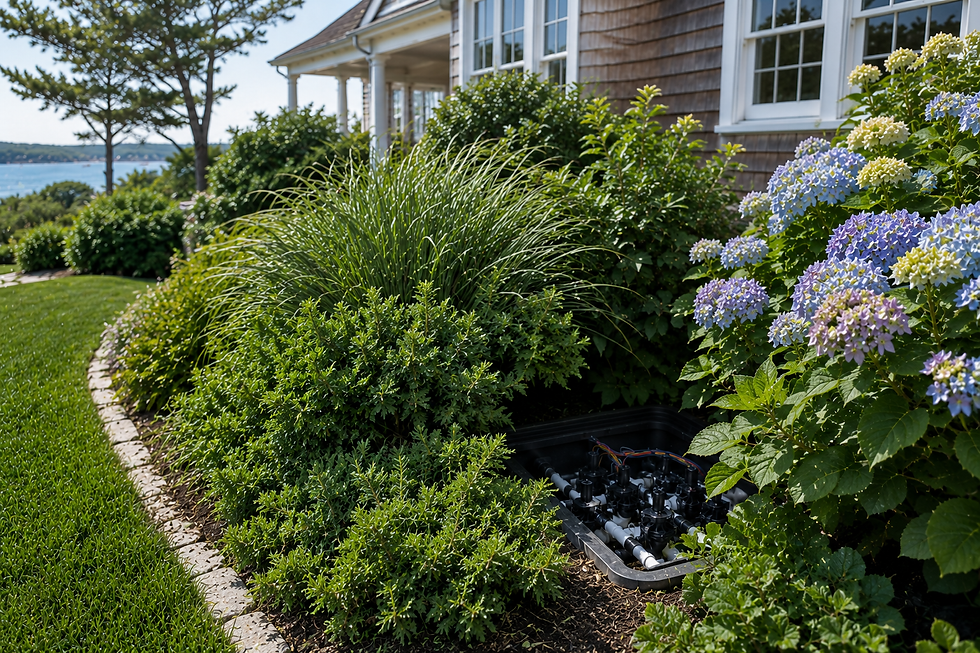
Why Sandy Soil Creates Unique Challenges
Martha’s Vineyard and Cape Cod landscapes benefit from excellent drainage.
The downside is that irrigation problems can remain hidden.
Water escaping from a damaged line often disappears quickly into sandy soil. Unlike heavier clay soils that may reveal puddling immediately, sandy conditions can conceal significant water loss.
At the same time, sandy soils hold less moisture, making efficient irrigation even more important.
A small pressure problem that might go unnoticed elsewhere can have a much greater impact on plant health in coastal environments.
For this reason, accurate irrigation performance is not simply about convenience. It is directly tied to landscape preservation.
Homeowners exploring broader landscape health strategies may also find value in understanding how irrigation interacts with lawn care programs, soil conditions, and seasonal maintenance planning.
Take a deep dive into Miller’s Landscape blog archives: https://www.millersprolandscape.com/post/theimportanceofefficientirrigationincoastallandscaping
The Cost of Waiting
Most irrigation pressure problems begin as minor issues.
Few remain minor forever.
A small leak can increase utility costs throughout the season.
Uneven watering can weaken turf and ornamental plantings.
Hidden failures can create larger repairs once peak summer demand arrives.
On Martha’s Vineyard, where seasonal construction schedules, permitting requirements, and contractor availability are often compressed into a limited window, delaying repairs can also mean waiting longer for resolution.
Addressing problems early typically protects both the irrigation system and the landscape it supports: https://www.millersprolandscape.com/
A Healthy Landscape Depends on More Than Water
The most successful irrigation systems are not necessarily the ones that run the longest.
They are the ones that deliver water efficiently, consistently, and precisely where it is needed.
When pressure begins declining, the problem is rarely just about sprinklers.
It may be revealing a leak beneath the lawn, damage from winter conditions, aging components, improper system balancing, or hidden inefficiencies that have been developing for years.
For homeowners on Martha’s Vineyard and Cape Cod, where landscapes represent a significant investment and coastal conditions place unique demands on irrigation infrastructure, maintaining proper system pressure is one of the most effective ways to protect long-term landscape performance.
A healthy lawn often begins with healthy irrigation. The sooner pressure issues are identified, the easier they are to solve.


Comments